
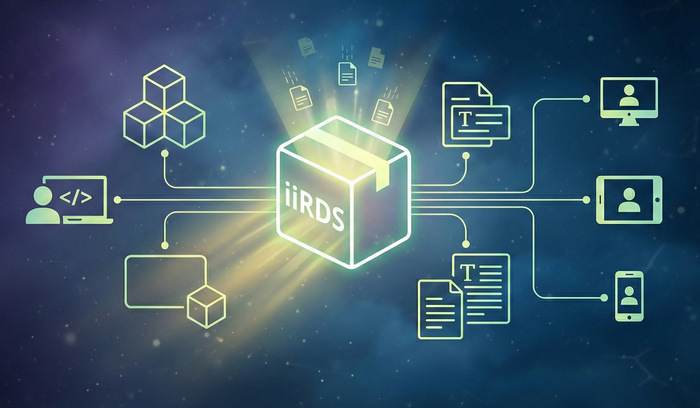
iiRDS (Intelligent Information Request and Delivery Standard) is an open, vendor-neutral specification designed to enable more intelligent, context-aware delivery of technical information. It allows organizations to package and deliver documentation so that users and systems can find exactly what they need, when they need it, across various platforms and devices.
A common misconception is that iiRDS only works well with structured authoring, such as XML-based frameworks like DITA or S1000D. However, this is not the case. Even content created in tools like ClickHelp or other non-XML editors can benefit from iiRDS. The standard is flexible enough to work with less structured content, making it valuable for a wide range of documentation processes.
What Is iiRDS in Simple Terms
iiRDS enables intelligent, context-aware delivery of technical information. Imagine a user looking for a specific instruction, such as replacing a brake pad on an Audi Q5. Rather than searching through a dense PDF or scrolling endlessly in a help portal, iiRDS allows systems to provide exactly the right information, in the correct format, at the moment it’s needed — whether that’s via a PDF, an HTML5 Help system, or a dynamic Web Help portal.
The key difference between iiRDS-enabled content and simply “well-structured text” lies in semantic metadata linked to each topic. Semantic metadata describes what the content is about, why it is useful, and how it relates to other information or user needs.
For instance, metadata can indicate that a procedure is a “maintenance task,” intended for a “Q5 model,” and relevant to “safety-critical” applications. This structured metadata helps users and technical support teams locate the right information quickly. It also enables automated systems and IoT devices to interpret and act on documentation intelligently, powering next-generation service ecosystems.
Structured Authoring Is No Longer A Mandatory Requirement
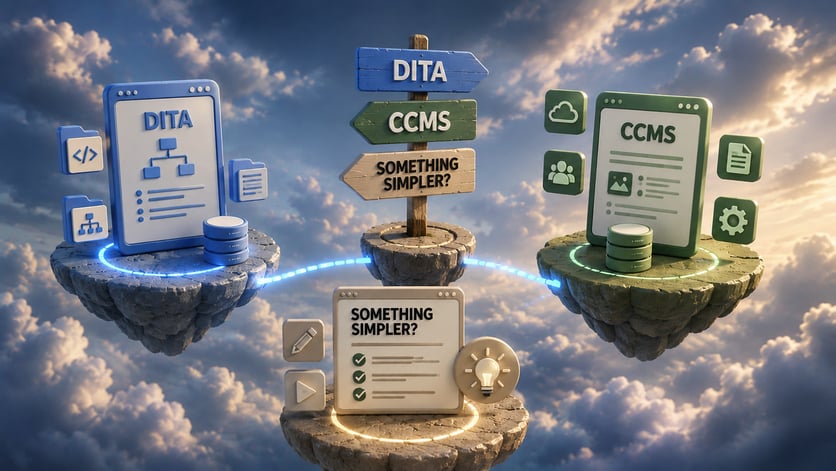
Structured authoring, often achieved using XML standards like DITA, is widely regarded as the gold standard for enabling content to be easily tagged, reused, and delivered intelligently. While it certainly simplifies iiRDS implementation, it is not a strict requirement.
Most iiRDS tools and workflows allow you to “overlay” iiRDS metadata on top of existing documentation, even if it was created in less structured environments. For example, content authored in ClickHelp or similar tools can be exported as HTML or PDF and then enriched with iiRDS metadata manually or semi-automatically using external tagging tools or scripts.
You don’t need to overhaul your entire authoring process to leverage iiRDS. By starting with metadata enrichment on your current content, you can gradually move toward more advanced intelligent content delivery. This flexibility makes iiRDS accessible to a wider range of technical writers and organizations, not just those already using structured authoring.
Who Needs iiRDS and Why – Even if You Write In a “Simple” Way
iiRDS benefits multiple stakeholders in a company, whether your authoring process is simple or complex:
- Product Developers: They want documentation that integrates seamlessly with service and support systems. iiRDS allows intelligent service platforms to consume documentation, improving issue resolution speed and overall product support.
- Technical Writers: Even when creating content in a straightforward manner, tagging it with iiRDS metadata helps future-proof your documentation. Such content is easier to migrate to new content management systems or intelligent delivery platforms as your organization evolves.
- Businesses: For companies focused on interoperability, iiRDS standardizes documentation to work with partner systems and supports machine-readable information exchange. This is especially valuable for IoT solutions, predictive maintenance, and automated processes.
In short, iiRDS is not only for large enterprises with complex documentation needs. It is a forward-looking standard that can benefit anyone aiming to make technical content more intelligent, accessible, and ready for the connected ecosystems of the future.
iiRDS: Turning System Integration into a Commodity
One of the most transformative impacts of iiRDS is how it is making system integration (SI) more accessible and removing traditional barriers. In the past, connecting technical documentation with enterprise systems, service platforms, or IoT environments often required specialized SI companies. These firms typically demanded costly custom development, complex workflows, and deep technical expertise, creating high entry barriers and limiting flexibility.
iiRDS addresses this challenge by providing a standardized, open format for packaging and delivering metadata-rich content. With this standardization, iiRDS packages can be integrated seamlessly into a variety of platforms without bespoke coding or heavy customization. As a result, organizations can implement intelligent content delivery solutions with minimal reliance on external SI providers.
For example, a mid-sized manufacturing company wanted to integrate its technical manuals with an existing IoT-based predictive maintenance platform. Previously, this would have required contracting a system integrator to build custom connectors and workflows — a process that could take months and cost tens of thousands of dollars. By using iiRDS, the company packaged its documentation with standardized metadata and uploaded it directly into the platform, which natively supported iiRDS packages. This eliminated the need for custom development, reduced costs significantly, and shortened deployment from months to weeks.
This democratization empowers businesses to take control of their documentation ecosystems, accelerate time-to-market, and cut costs. For system integrators, it shifts the focus from custom builds to value-added services around iiRDS. For users, it removes the traditional hurdles that once made integration complex and expensive.
Getting Started with iiRDS Step by Step
You don’t need to redesign your entire documentation process overnight. Here are practical steps to gradually start using iiRDS:
- Leverage Metadata: Start with simple metadata such as categories, tags, and filters. Tools like ClickHelp allow you to tag and organize content, which can later be mapped to iiRDS metadata fields.
- Create Modular Content: Break your documentation into smaller, reusable modules or topics, even without DITA. Modular content is easier to tag, update, and deliver contextually.
- Find iiRDS Tools: Explore iiRDS package generators and validators available on the market. These tools help you package your content and metadata into standard iiRDS packages, ensuring compliance and interoperability.
- Add Metadata to Exports: For example, inject iiRDS metadata into PDF exports to make them part of an intelligent content delivery system. This allows static documents to integrate into dynamic content ecosystems.
Starting with these small steps helps you build confidence and gradually transform your documentation into intelligent content, without disrupting your existing workflows.
The Future of Intelligent Information Request (IoR) and iiRDS
As industries continue to embrace digital transformation, the future of Intelligent Information Request (IoR) and iiRDS looks exceptionally promising. IoR envisions a world where users — from field technicians to end customers — can request exactly the information they need in real time, tailored to their context, device, and situation. iiRDS provides the foundational standard that makes this vision achievable by enabling seamless, intelligent content delivery.
Key trends shaping the evolution of iiRDS and IoR include:
- Deeper Integration with AI and Machine Learning: iiRDS metadata will increasingly power AI-driven recommendation engines and virtual assistants. These systems will better understand user intent and proactively deliver the most relevant information, reducing downtime and enhancing the user experience.
Example: A virtual assistant in a smart factory can interpret a technician’s spoken request (e.g., “How do I calibrate this sensor?”) and immediately provide the correct procedure, safety warnings, and troubleshooting steps. Machine learning algorithms can also analyze usage patterns to refine recommendations over time.
- Expansion into IoT and Industry 4.0: As more devices become interconnected, iiRDS enables documentation to be consumed directly by IoT systems for automated diagnostics, predictive maintenance, and adaptive workflows. This transforms technical documentation from static references into dynamic, actionable data sources.
Example: A wind turbine with IoT sensors detecting abnormal vibrations can query an iiRDS-enabled knowledge base to retrieve turbine-specific maintenance instructions and trigger a service alert with embedded repair documentation sent directly to a technician’s tablet.
- Greater Interoperability and Ecosystem Growth: Broader adoption of iiRDS by vendors and platforms will foster an ecosystem of interoperable tools and services. This simplifies content reuse, sharing, and integration across organizational boundaries, accelerating innovation and collaboration.
Example: A multinational automotive company uses iiRDS packages to share technical documentation seamlessly between its design, manufacturing, and after-sales service divisions across different countries and software platforms. This interoperability reduces duplication and ensures everyone accesses the latest, consistent information.
- Enhanced User-Centric Delivery Models: Future iiRDS implementations will focus on delivering content tailored not only by product or task but also by user role, skill level, language, and accessibility needs, making documentation truly personalized and inclusive.
Example: A customer support portal powered by iiRDS can tailor content delivery based on user profiles—offering beginner-friendly guides with step-by-step visuals for new users, while providing detailed technical specifications and diagnostic data to expert engineers, all in their preferred language and accessible formats.
- Cloud-Native and Microservices Architectures: iiRDS packages and delivery mechanisms will leverage cloud-native technologies and microservices for scalable, flexible, and resilient content delivery infrastructures.
Example: A SaaS-based documentation platform leverages microservices to ingest, process, and deliver iiRDS packages dynamically. This cloud-native approach allows rapid scaling during peak demand, such as product launches or maintenance windows, ensuring users receive uninterrupted, fast access to critical information worldwide.
In summary, the future of IoR and iiRDS lies in transforming technical information into a smart, adaptive, and integral part of digital ecosystems. Organizations that embrace these advancements will gain a competitive edge through superior support, improved operational efficiency, and enhanced customer satisfaction.
Conclusion
iiRDS does not require a rigid format or advanced authoring tools. Instead, it opens your content to be more accessible, contextual, and machine-readable, enabling intelligent delivery that meets users’ needs efficiently.
By adopting iiRDS gradually, you future-proof your documentation and integrate it into a smart ecosystem ready for advanced service platforms, IoT devices, and automated workflows.
Don’t wait for a perfect structured authoring setup — start with what you have today. Add metadata, modularize your information, and experiment with iiRDS tools. This incremental approach allows you to unlock the full potential of iiRDS and intelligent content delivery.
Good luck with your technical writing!
Author, host and deliver documentation across platforms and devices
FAQ
What is iiRDS?
iiRDS (Intelligent Information Request and Delivery Standard) is an open, vendor-neutral standard that enables intelligent, context-aware delivery of technical content. It uses metadata to help systems and users find exactly the information they need, in the right format, at the right time.
Do I need structured authoring to use iiRDS?
No. While structured authoring frameworks like DITA or S1000D can simplify iiRDS implementation, iiRDS can also be applied to content created in non-XML tools such as ClickHelp. You can add metadata incrementally to existing content without overhauling your authoring process.
Can iiRDS integrate with AI, IoT, or Industry 4.0 systems?
Yes. iiRDS metadata enables AI-driven recommendations, virtual assistants, and IoT systems to consume documentation for predictive maintenance, adaptive workflows, and automated diagnostics.
Do I need to hire system integration (SI) specialists?
Not necessarily. iiRDS packages provide a standardized format, reducing the need for custom development. Many platforms can consume iiRDS content directly, making system integration more accessible and affordable.
Is iiRDS only for large enterprises?
No. iiRDS is suitable for organizations of all sizes. It helps make content intelligent, accessible, and interoperable, even for smaller teams or companies without advanced structured authoring setups.
What is the future of iiRDS and Intelligent Information Request (IoR)?
The future includes deeper AI integration, expansion into IoT and Industry 4.0, user-centric delivery models, and cloud-native architectures. iiRDS will make technical documentation smart, adaptive, and integral to digital ecosystems.