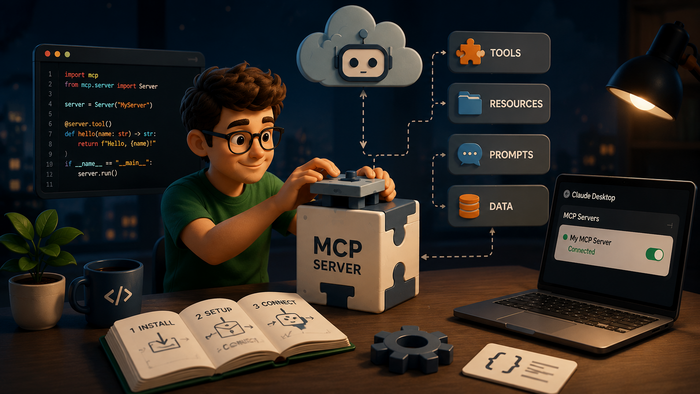


In IT, AI is often used to help create documentation, such as API specifications, runbooks, and onboarding guides. But AI can only work well if the source content is accurate and well-structured.
When documentation is outdated, inconsistent, or poorly structured, it creates what is known as content debt. AI working with such documentation can produce errors, such as incorrect code snippets, failing runbooks, or misleading instructions.
For example, AI might generate deployment steps from old guides that do not reflect recent infrastructure changes. It might also mix terminology from different teams, creating instructions that do not work in practice. Such mistakes reduce team productivity and increase operational risks.
Before implementing AI, it is crucial to pay off content debt. Clean, consistent, and well-structured documentation allows AI to generate accurate outputs and improves both user experience and internal workflows.
What Is Content Debt?
Content debt is a metaphorical extension of technical debt, a concept introduced by Ward Cunningham in 1992. Technical debt describes the long-term cost of shortcuts in code, design, or documentation that accelerate development but require more maintenance later.
Content debt applies this idea to documentation: outdated guides, inconsistent terminology, and incomplete specifications slow teams down and introduce risks when AI consumes the content. In IT, this shows up as poorly maintained API docs, stale runbooks, and fragmented instructions.
The metaphor emphasizes “paying off” content debt in advance so that AI has reliable, high-quality data to work with.
AI’s Role and Limitations in IT Documentation
AI is increasingly used to automate documentation tasks: generating API references from code, producing release notes from commit histories, or creating onboarding guides from project repositories.
However, AI’s performance heavily depends on high-quality input:
- Incomplete or conflicting API documentation → incorrect code snippets.
- Varied terminology for the same components → inconsistent AI recommendations.
- Outdated architecture diagrams → broken deployment scripts and CI/CD failures.
Dirty or inconsistent content does not get corrected by AI; instead, errors are amplified.
How Content Debt Undermines AI Accuracy
AI models analyze documentation to identify patterns and generate technical content. When documentation is outdated, inconsistent, or incomplete — in other words, when content debt exists — it introduces noise that reduces the model’s ability to understand context accurately.
Precise and consistent terminology is essential in software documentation. If variable names, method signatures, or system component labels differ across documents, AI outputs will reflect these contradictions. For example, in a microservices architecture, one team might document an authentication endpoint as authService.loginUser(), while another refers to the same functionality as userAuth.validateCredentials(). An AI model trained on both sets of documentation may produce hybrid code snippets that do not compile or run correctly, wasting developer time on reconciliation instead of building features.
Infrastructure documentation that does not reflect the current production environment also poses risks. Outdated database schemas, retired servers, or decommissioned services can mislead AI when generating runbooks, troubleshooting guides, or deployment instructions. Such errors may result in operational failures, downtime, or misconfigurations that increase business risk.
In addition, fragmented or “ghost” documentation — such as instructions left in deleted code branches or legacy comments — can further confuse AI. The model may suggest solutions that are no longer valid, forcing engineers to spend extra time validating or correcting its output.
Finally, knowledge silos in legacy codebases, where critical information exists only in the minds of experienced personnel and is absent from formal documentation, limit AI’s effectiveness. Without comprehensive, centralized documentation, AI is restricted to generic responses that are often unhelpful, slowing down modernization efforts and obstructing scaling or refactoring initiatives.
Overall, content debt directly undermines the reliability of AI-generated documentation. It increases onboarding times, introduces operational risk, and erodes confidence in AI tools if left unaddressed.
Real-World Cases: How Content Debt Sabotages AI
In software development, the effects of content debt are tangible and often costly. Poor documentation doesn’t just slow teams down — it actively sabotages AI outputs. The following real-world scenarios illustrate how content debt can lead to errors and inefficiencies in IT workflows:
- API Documentation Gaps. AI systems rely on complete and consistent API documentation to generate integration instructions. When endpoint information is missing or conflicting, AI may produce incorrect RESTful calls or code examples. This not only confuses developers but also floods support channels with integration bugs. Engineering teams then spend hours fixing avoidable issues instead of focusing on new feature development.
- Outdated Architecture Diagrams. AI models that reference old architecture diagrams can make serious mistakes. Deployment scripts generated from legacy diagrams may not account for recent cloud migrations, container orchestrations, or updated network topologies. The result can be broken CI/CD pipelines, unexpected downtime, and slower delivery, negating the intended benefits of automation.
- Ghost Documentation occurs when AI relies on outdated comments, deleted code branches, or legacy instructions. The AI may generate solutions that are no longer relevant to the current codebase. Teams end up chasing shadows, spending significant time validating or rolling back AI’s inaccurate suggestions, which slows development and frustrates engineers.
- Knowledge Silos in Legacy Code. In many legacy systems, critical logic resides only in the minds of experienced personnel and is absent from formal documentation. Without comprehensive documentation, AI is limited to generic, unhelpful responses. This restricts modernization efforts, slows refactoring, and complicates scaling, as AI cannot infer knowledge that has not been documented.
Across these examples, the consequences of content debt are clear: longer onboarding, increased operational risk, higher costs, and diminished trust in AI tools. Addressing content debt proactively is essential to unlock AI’s full potential in IT documentation workflows.
Strategies to Address Content Debt Before AI Adoption
To ensure AI produces accurate and reliable outputs, IT teams must pay off content debt through several key strategies. First, comprehensive documentation audits help identify outdated, inconsistent, or incomplete content. Using a combination of automated analysis tools and manual review, teams can create an accurate inventory of documentation health and prioritize areas for cleanup.
Second, implementing documentation-as-code practices aligns documentation updates with source code changes. Tools like JSDoc, Sphinx, or MkDocs, integrated into version-controlled workflows, prevent documentation drift and ensure continuous synchronization with the development process.
Third, terminology standardization and glossaries are critical. Consistent naming conventions across the organization unify AI training data and prevent semantic fragmentation that could lead to inconsistent outputs.
Fourth, integrating automated validation into CI/CD pipelines helps maintain content quality. Documentation linters, link checkers, and style validators prevent regressions and ensure that every update meets quality standards throughout the development lifecycle.
Finally, after the foundational cleanup, iterative AI-assisted review can accelerate ongoing content debt reduction. AI tools can highlight residual inconsistencies, suggest rewording, or flag areas that need additional clarification, helping teams maintain high-quality documentation continuously.
By combining these strategies — audits, documentation-as-code, terminology standardization, automated validation, and AI-assisted iteration — IT teams can significantly reduce content debt. This lays the foundation for reliable, AI-assisted documentation that enhances development efficiency and operational reliability.
Implementing Content Debt Strategies with ClickHelp
ClickHelp is a modern documentation platform that offers practical tools for solving content debt and preparing documentation for effective AI integration.
- First, ClickHelp supports comprehensive documentation audits through Reporting and Analytics, Ask Your Docs, Version History, and Global Find and Replace. Teams can identify inconsistent content and track changes over time.
- While not a docs-as-code tool, it supports automation through its REST API, allowing teams to trigger tasks like project backups or publishing externally.
- The platform supports standardization through Content Snippets and Index Keywords. These tools help enforce consistency in terminology.
- Besides, the collaborative workflows with Reviewer roles and Topic Statuses foster ongoing content quality.
- Finally, ClickHelp enables link verification and style management through centralized CSS, ensuring compliance during the authoring process.
By using the capabilities of ClickHelp along these strategic lines, IT teams can significantly reduce content debt and lay a sound foundation for trustworthy and effective AI-assisted documentation processes.
Conclusion
AI has transformative potential in IT documentation—but only when content debt is addressed. By conducting audits, standardizing terminology, and integrating docs with development workflows, teams can eliminate content debt, reduce AI errors, and unlock reliable, AI-assisted knowledge ecosystems.
Key takeaway: “Pay off your content debt before AI makes its judgments.”
Good luck with your technical writing!
Author, host and deliver documentation across platforms and devices
FAQ
What is content debt?
Content debt is a metaphor for outdated, inconsistent, or poorly structured documentation. Like technical debt in code, it slows teams down, creates errors, and increases maintenance costs.
Why does content debt matter for AI?
AI relies on clean, structured data to generate accurate outputs. Content debt introduces noise and contradictions, causing AI to produce incorrect code snippets, failing runbooks, and misleading instructions.
Can AI fix content debt automatically?
No. AI can assist in identifying inconsistencies or suggesting improvements, but it cannot replace the process of cleaning, standardizing, and updating documentation. Humans must address content debt first.
What are the risks of ignoring content debt before AI adoption?
Ignoring content debt can lead to inaccurate AI outputs, increased operational risk, slower onboarding, higher support load, and loss of trust in AI-generated documentation.
When should a team start paying off content debt?
Ideally, before deploying AI to generate or assist with documentation. Early cleanup prevents AI from amplifying errors and ensures higher accuracy in outputs.
Does paying off content debt improve non-AI documentation too?
Yes. Clean, structured documentation benefits developers, support teams, and end-users alike, reducing onboarding time, support requests, and operational mistakes.